


If you are touring the area take the opportunity
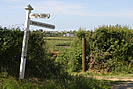
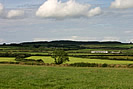
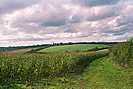
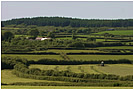
to explore the real North Devon countryside. There are many picturesque
villages off the main A39 Atlantic Highway. If you have just been to the
beach at Bucks Mills go straight across the A39 at Bucks Cross and make
your way to Woolfardisworthy or Woolsery. as it is known locally. The
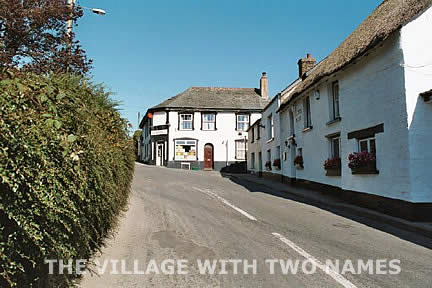
village with two names lies inland approximately 600 feet above sea level.
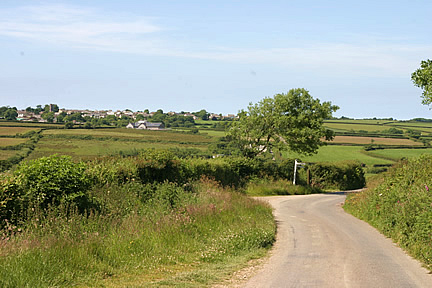
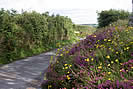
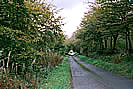
The country lanes are narrow and wind upwards and onwards through steep
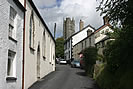
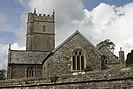
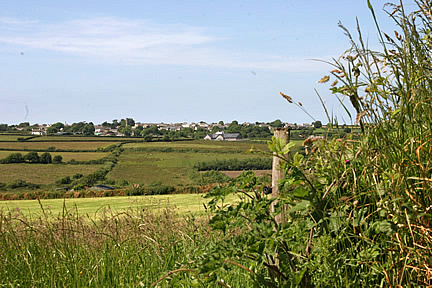
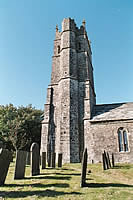
banked hedgerows. As you come down into Woolsery you can see the medieval
tower of All Hallows Church on the skyline. Although the actual village
of Woolsery itself is quite small, Woolsery Parish covers a wide area
including the hamlets of Ashmansworthy, Leworthy and Alminstone and is
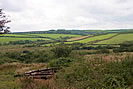
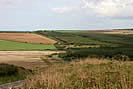
surrounded by unspoilt countryside with remote farms and areas of moorland,
marsh, forest and woodland stretching out across the A39 to more than
a mile of the Heritage Coast including the area to the west of the stream
at Bucks Mills on the shores of Bideford Bay. To the south a natural border
line is formed by the River Torridge. It is said the source of the Tamar
can be found in the highlands about one hundred yards from the old boundary
stone marked "Bradworthy-Moorwinstow" and after seeping through
swamp, sedge and rushes, the waters drift in opposite directions to form
the Rivers Tamar and the Torridge. The infant Torridge trickles down a
shallow valley and by the time it reaches the first Bridge at Brimford
has become a stream. Beyond Horton Bridge it is joined by Clifford Water
and continues on through the countryside with Woolsery Parish on one bank
and the northern border of Bradworthy Parish on the other. The landscape
changed from earlier times when the Forestry Commission planted conifers
on land that was once moorland rough grass, gorse and heather. The Commission
was established in 1919 to replenish woodlands depleted in the 1st World
War and by 1927 began to buy land around the village. This land, when
worked in earlier times with horses was used to produce wheat not only
for grain but straw for thatching and although workable with horses was
too wet for modern agricultural machinery. The Sitka Spruce planted in
the 1930's were harvested in the 1970's and used for commercial purposes
for mine pit-props and agricultural fencing. At the time of writing the
village with two names had two inns, The Manor House and the Farmers Arms.
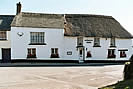
It is reputed that the Farmers Arms was originally built to house the
builders of the church and in 1857 the local magistrates court was held
in an upper room. Up until the 1950's the highlight of the village calendar
was the Woolsery Market which was held on the 4th Thursday of each month.
The indigenous North Devon Cattle, "Ruby Reds", were once sold
at this market, along with sheep, lambs and pigs, as well as corn and
seed, merchants and farmers settled their accounts in a private room at
the Farmers Arms. In 1892 the first Woolfardisworthy "Colt Show",
now the Woolsery Show, was held and
apart from the war and foot and mouth it continues to be a draw for locals
and visitors. It is currently held annually on the last Monday in July
at Clovelly Court. Woolsery itself has a reputation for being "The
Friendly Village" and this small local show works on the same principle.
Don't miss the unique "Woolsery Weekend" which is held in June
each year, when visitors are invited to look around the village and surrounding
countryside. There is much to see and do with many of the villagers' gardens
open to the public. Don't leave without sampling the delicious cream teas
and lunches made with locally produced cream, butter, cheese, milk and
ice cream. This is an ideal opportunity to view the award winning Village
Hall where local arts and crafts are on display. Another popular event
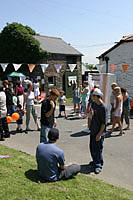
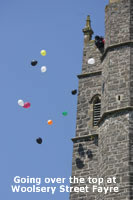
in the village calendar is a "Street
Fayre" held in July when the road is closed for the afternoon.
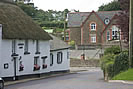
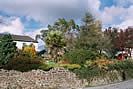
Woolfardisworthy 2005 definitely has the best of both worlds, new housing
development goes side by side with the old village cottages and the community
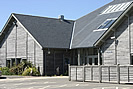
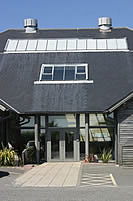
marked the Millennium with a new Village Hall. The building, which opened
in December 2000, is one of the most energy efficient, low maintenance,
environmentally friendly buildings in the country! Woolsery has its own
Football and Tennis Clubs and the tennis courts are open to visitors.
The foundation stone of the present village school was laid in 1878, the
school opened with January 1879 and in his book "If only the Walls
could Speak" published in 1970, Mr. C. B. Griffiths recorded - "There
were eight pupils but no books! Woolsery County Primary School today has
100 pupils and although it retains its Victorian frontage it is now well
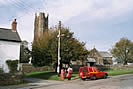
equipped with many modern resources. The church of "All Hallows"
is believed to have been built in the 12th century, but was mostly rebuilt
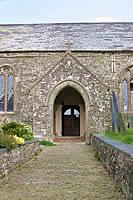
in 1845, the south door is of Norman design with the Chancel retaining
a restored medieval wagon roof . All Hallows was dedicated by the Bishop
of Exeter, Walter Branescombe on 26th July 1261. Richard Cole, who built
the old Quay at Bucks Mills is buried here, his effigy can be found at
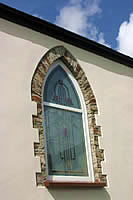
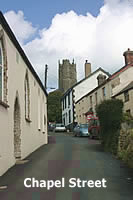
the North Door. Woolsery Chapel in Chapel street was built in 1857 but
although refurbished 1993 still retains the original oak panelling around
the pulpit. A formal Covenant links the Chapel and the Church - a "Covenant
Candle" is used when joint services are held in both the church and
the chapel. The candle has two colours intertwined to represent the two
congregations worshipping together. At the heart of the village is the
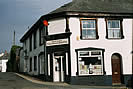
local Post Office Stores, a vital service for all rural communities. If
you decide to stay, a "friendly" Woolsery welcome awaits you
at nearby inns, hotels, restaurants or bed and breakfast establishments.
In addition there is an excellent garden centre with tea rooms nearby.
the Hartland Forest Golf Club is no more but the private holiday lodges
on the site are still available and walkers can enjoy pleasant woodland
trails or join the more demanding Coast Path at Bucks Mills. For those
who prefer to explore the countryside on horseback there is a riding stables
in the vicinity. Check out Woolsery
Parish Council's own community web site for information on the Village
Hall and community events. Woolsery was
voted The best Kept Village 2008.
Historical
Information - J.T. Downes, ISO, Woolfardisworthy (Woolsery) The
Village with Two Names, Cecil Collacott, The River Torridge - From
its Source to Torrington available from Bideford Library, Jane
Cann and John Crossman 1914 -1918 Woolsery and Bucks Remember available
from Woolsery Post Office Stores
NB. Sadly the Manor House closed its doors around
2006 and Farmers Arms pulled its final pint in December 2012, however
in 2014, as widely publicised in both local and national press, both were
purchased by millionaire Bebo founders Michael and Xochi Birch. The beautiful
thatched inn is being restored to its former glory and in August 2016
plans were approved to turn the Manor House into a 19-bedroom hotel and
public café. They also bought the village fish and chip shop, which
was renovated and reopened in July 2015. Michael Birch who lives in
San Francisco, originally comes from Woolsery and has a long family connection
with the village. Job Andrew, Mr Birch's great-great grandfather, built
Woolsery village shop, which remained in the family until it was sold
in 1961. His grandmother, Millicent Andrew, was born in the village shop's
premises in 1900, and his grandfather Joseph Burrow was born at Ashcroft
Farm. Michael and Xochi Birch, who founded Bebo in 2005 and sold it to
AOL in 2008 for £370m.